
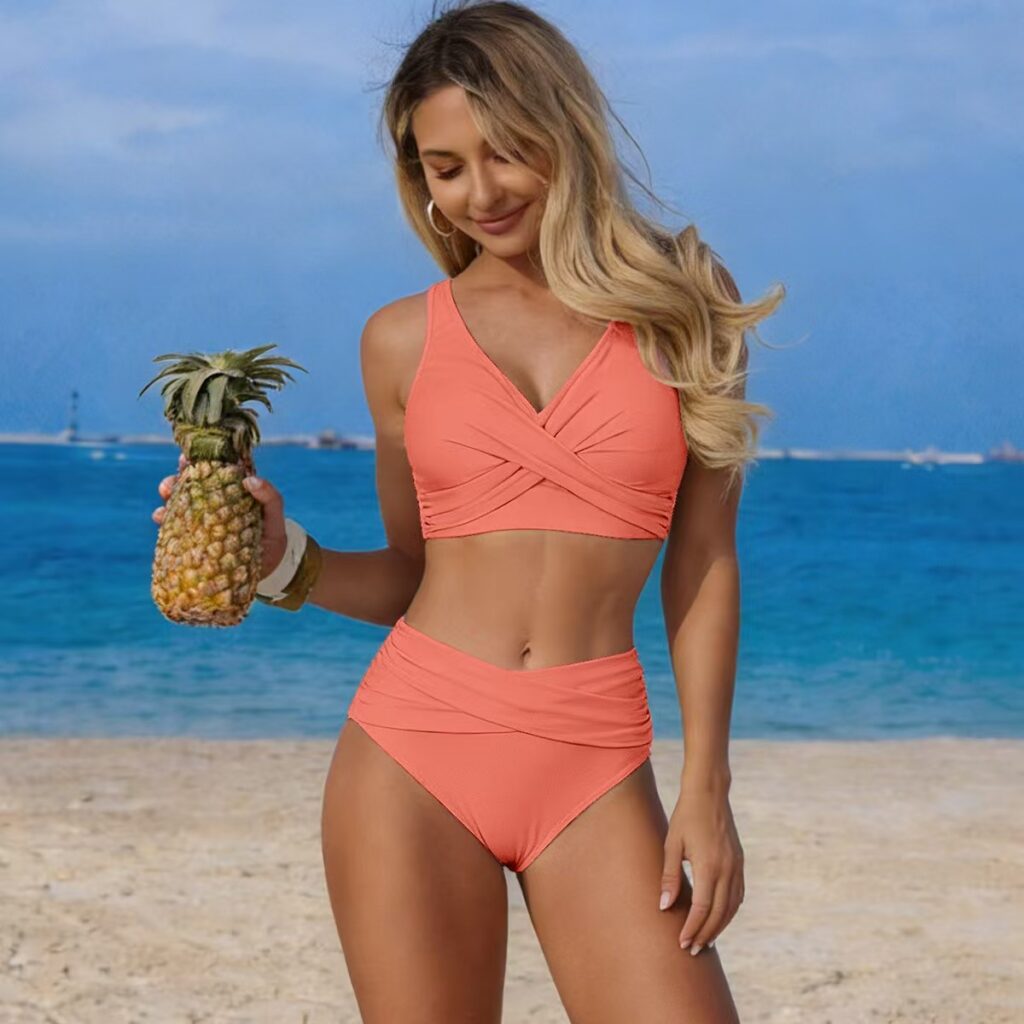
Before using a swimwear size chart in a purchase specification, confirm its units, whether the values refer to a body or a garment, and how each relevant measurement is defined. Chunxi’s Clothing, swimwear page lists S through XXL with bust and hips ranges, but the visible chart text does not state those definitions. Preserve the published values as a reference and request clarification before converting them into sample dimensions, order tolerances or size-selection advice. The practical buying document is a measurement-definition sheet linked to the exact style and chart revision.
Transcribe the chart without supplying its missing meaning
Save the actual two-piece product page and identify the chart being discussed. The current text includes an S bust range of 81–85 and hips range of 91–95. Retain the original numbers and labels together. Do not append a unit that was not stated, divide a circumference into an assumed flat width, or treat the range as a permitted manufacturing variation.
Keep a source column and a separate supplier-confirmation column. This prevents a working assumption from becoming indistinguishable from an agreed answer when the spreadsheet is copied. If the supplier provides a corrected chart, retain both versions and label the replacement. A clear correction is more useful than silently editing the copied source until it appears complete.
• Source labels and ranges remain a dated transcription of the page.
• Units and body-versus-garment meaning require explicit supplier confirmation.
• Physical garment measurements belong in a separate sample record with defined points.
Separate the published ranges from the buying questions
A compact clarification table can preserve the page information while making its limits obvious. The bust and hips headings alone do not identify the measuring path or the physical state of a garment. Ask the supplier which interpretation is intended and whether the same chart applies to the particular top and bottom reference under discussion. Do not generalise this page’s chart to the separate ring-and-tie Bikini product.
The response should identify the applicable style and chart revision, rather than simply answering yes beside a list of numbers. When a buyer needs another unit system for internal records, retain the original confirmed unit and label any later conversion separately. Conversion cannot resolve an unknown measurement definition or transform body ranges into actual garment dimensions.
Published size label
Page bust range
Page hips range
Clarification still needed
S
81–85
91–95
Unit, body or garment, and chart applicability
M
86–90
96–100
Same definitions; do not infer from adjacent row
L
91–95
101–105
Confirm source revision and relevant style
XL
96–100
106–110
Confirm definitions before sample comparison
XXL
101–105
111–115
Confirm offered size label and applicable chart
Request a drawing for actual garment measurement points
For a later physical sample check, ask for a drawing or annotated photograph showing each agreed start and finish point. The crossover front and high-waisted bottom are useful orientation references, but their visible outline is not a measurement method. Identify the top and bottom separately and ask how the supplier names the points it proposes to use.
The definition sheet should state the garment state, the measuring path and whether a value is a width, length or circumference. If any tension or extension is relevant to a proposed method, it must be explicitly specified and agreed; the buyer should not invent a stretching procedure from the catalogue description. Leave unprovided method details unresolved. This keeps a dimensional record separate from claims about stretch recovery, fit or wearer comfort.
Record a sample result only after the method is agreed
When an actual sample is available, record its identifier, garment component, attached size label and the measurement-definition revision used. Enter the observed result beside the matching point. A measurement taken at an undefined location is difficult to compare, even if its number resembles a chart value. Record an unavailable point as not measured rather than treating a blank cell as zero.
Keep nominal garment values and any proposed tolerances separate from the body ranges copied from the page. Obtain the relevant supplier agreement before describing a result as within specification. The catalogue has not supplied a tolerance by showing a range of body-related labels whose meaning remains unconfirmed. Likewise, a sample measurement is not evidence that the entire production order has been checked or that a labelled size will fit a particular person.
Keep commercial size requests connected to the clarified chart
After the definitions are resolved, refer to that chart revision when asking which labelled sizes can be offered. Keep the requested quantities in a commercial size assortment sheet and keep measured sample results in the dimensional record. These documents can share product and sample identifiers without merging their different meanings. A requested quantity does not prove availability, and an offered size label does not prove a measured result.
Send the clarification sheet through Chunxi’s contact page with the saved chart and selected product reference. Retain any written changes so another buyer can reconstruct the decision. The Chunxi blog may later host related procurement notes, but the working specification should point to the actual supplier response. The goal is an explicit, reusable measurement definition rather than a fit recommendation derived from a styled photograph.
Frequently asked questions
Can the numbers be labelled centimetres because that seems likely?
No. Preserve the numbers and request the intended unit. A likely interpretation should not be presented as a fact supplied by the product page.
Is a bust range a garment manufacturing tolerance?
Not by itself. Confirm whether it describes a body or garment, then obtain any separate nominal garment values and tolerances needed for a purchase specification.
Can the model photograph establish the size being worn?
No. The photograph identifies a visual product reference but does not provide a reliable measurement scale, model dimensions or a confirmed garment size.
What is the minimum useful sample measurement record?
Identify the actual sample and component, its size label, the agreed measurement points and method, and the observed results. Leave missing information explicit instead of filling it with assumptions.
Product and contact references
https://chunxiswimwear.com/product/clothing-swimwear/
https://chunxiswimwear.com/contact/
https://chunxiswimwear.com/blog/