
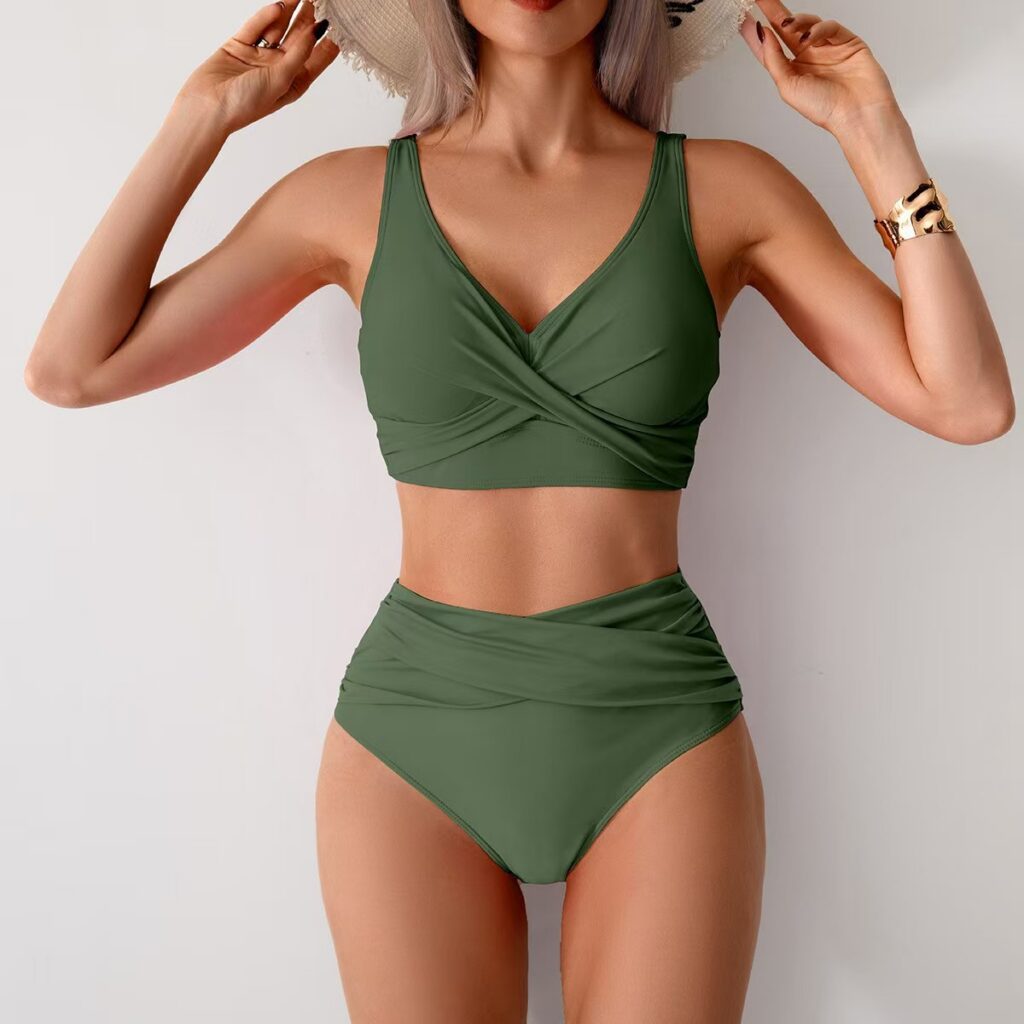
For a two-piece swimwear RFQ, define one quoted unit by naming the top, the bottom and the way their sizes and colours are paired. A photograph showing two garments is a useful identification reference, but a supplier-confirmed contents schedule must establish what will be supplied. Chunxi’s Clothing, swimwear page describes a crossover-style top with high-waisted bottoms and presents several gallery colour references. Start with that specific page, then turn the visual pairing into written order lines that purchasing, sampling and receiving teams can interpret consistently.
Name the two garment lines before assigning a price
Use the Clothing, swimwear product reference as the starting identifier and save the reference date with the enquiry. Give the top and bottom separate internal line codes even when the intended purchase is a matched set. This lets the supplier answer a question about one component without silently changing the other. The line codes are buyer document labels; they do not replace a supplier’s actual product or style code.
Record whether the requested commercial unit is a complete top-and-bottom combination, an individual garment, or a proposed assortment requiring confirmation. Do not enter a set price in a comparison sheet while leaving that definition blank. If a response uses the word piece, ask which garment that piece represents. Keep the original supplier wording alongside the clarified unit so another buyer can see how the interpretation was agreed.
• Top line: reference photograph, requested size label and supplier-confirmed identifier.
• Bottom line: its own reference and requested size label, even if it matches the top.
• Commercial line: exactly which confirmed component lines make up one quoted unit.
Use a contents schedule that makes omissions visible
A short schedule is more useful than a general statement such as complete outfit. The green catalogue image also includes styling accessories. Their presence beside the garments does not make them part of the supply. Name only the items actually requested and give the supplier a place to accept, exclude or query each line. An empty response is unresolved, rather than an implied acceptance.
Separate the contents of the selling unit from the packaging around it. A bag, printed card, hanger or outer carton would need its own confirmed line if requested. The product photograph does not establish any of those items. Keeping this separation makes it possible to compare a garment-only quotation with a packed offer without treating the two totals as equivalent.
RFQ line
Buyer request
Required supplier reply
Top
Crossover-style catalogue reference and selected size label
Exact offered top identifier and inclusion
Bottom
High-waisted catalogue reference and selected size label
Exact offered bottom identifier and inclusion
Quoted unit
Named combination of the accepted garment lines
Unit name and number of each garment within it
Packing
Only separately specified packing items
Included, excluded or separately quoted
Scene accessories
No inclusion inferred from styling
Only add a line if explicitly requested and offered
Pair colour and size labels without inventing an assortment
The page describes eight colours, while the enquiry still needs exact selected references. Give each requested combination a row and attach its corresponding gallery image. Describe the blue image as a visual reference until the supplier confirms a colour name or code. A screen image cannot establish a production colour tolerance, and the existence of a gallery option does not confirm stock, orderability or a complete size run.
State whether the top and bottom must carry the same size label, or whether mixed labels are being requested for discussion. Do not assume that either arrangement is offered. This document records the proposed pairing; it does not determine fit or translate a body measurement into a size recommendation. Keep quantity against each confirmed pair of component references so that a later colour change cannot disappear inside an overall total.
Keep the sample identity connected to the quotation
When a physical sample is available, assign an identifier to the top and another to the bottom, then link both to the enquiry revision. Capture the actual labels and the two items together for identification. The resulting record can show what was received and which quoted combination it represents. It should not claim material verification or performance approval simply because the pieces resemble the catalogue photographs.
If only one component arrives, record that fact against its line and leave the combination unresolved. If a different colour is supplied as a reference, record the substitution rather than relabelling it as the selected colour. These simple entries help the buyer distinguish a commercial contents decision from later appearance, measurement and material reviews. Each of those reviews can then refer to the same actual sample identifiers.
Close the RFQ with a versioned unit definition
Before comparing offers, check that every supplier reply points to the same contents revision. Record changes to garment identifiers, colour pairing, size-label pairing and packing as separate amendments. A lower amount is not directly comparable if it covers only a bottom while another amount covers both garments. Normalise only after the supplier has confirmed the contents and unit in writing; retain the original quotation wording for traceability.
Send unresolved lines through Chunxi’s contact page and retain the response with the reference images. The Chunxi blog can provide a place for later procurement notes, but the order schedule should remain a specific record tied to the selected product. The useful output is an agreed list of supplied pieces and their quotation unit, ready for purchasing review without assumptions about accessories, packing or availability.
Frequently asked questions
Does a two-piece photograph prove the quoted unit contains both garments?
No. It identifies a visual combination. Ask the supplier to name the top and bottom included in one quoted unit and retain that confirmation with the actual product reference.
Should a hat or jewellery visible in a catalogue scene be counted?
Only if separately requested and explicitly offered. Styling accessories are not evidence of supplied contents. Keep garment lines and optional accessories distinct.
Can top and bottom sizes be mixed?
That is a request for the supplier to confirm. Record the proposed labels independently and do not assume mixed sizing, stock or fit from the catalogue.
What should the buyer retain after the enquiry?
Keep the selected page and image references, the contents revision, the supplier’s exact unit definition and any physical sample identifiers. None of those records independently establishes performance or composition.
Product and contact references
https://chunxiswimwear.com/product/clothing-swimwear/
https://chunxiswimwear.com/contact/
https://chunxiswimwear.com/blog/